Sunday, 19 March 2017

Mid-March

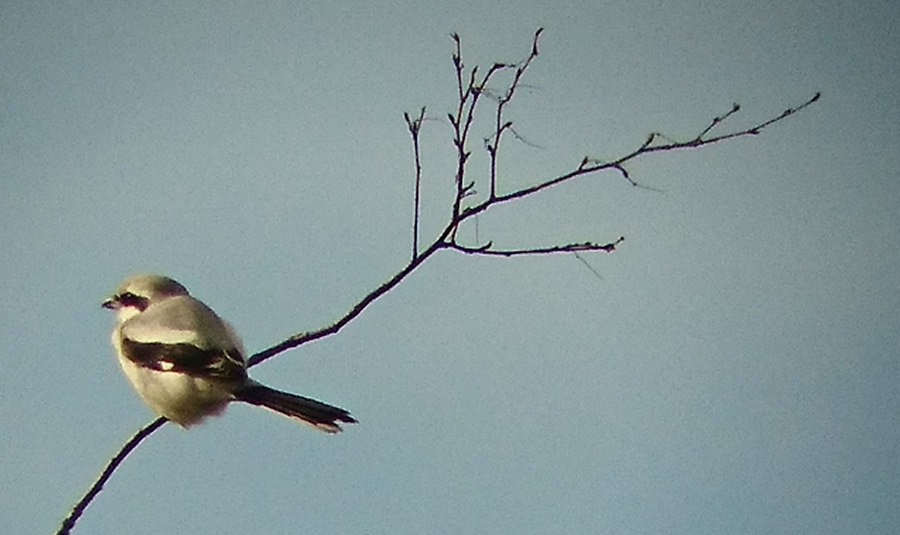
The Great Grey Shrike is still around on the airfield, and showed well on Wednesday in the early evening sunshine. It was hunting from saplings and bushes on the east side of the road.


Today, I led a guided walk at Wheldrake Ings followed by a drive round the eastern side of the LDV. Signs of spring in the air with several Chiffchaffs singing along with many Curlews back on territory. A flock of 18 Curlews at Wheldrake were presumably on their way further north. Always good to see these birds.


32 Whooper Swans at Wheldrake were undoubtedly migrants, with a further six at Aughton along with the wintering herd at Derwent Cottage. Four drake Scaup were still on the refuge at Wheldrake Ings, but little else of note apart from a Mink by Swantail Hide, a juvenile Peregrine and a very confiding Willow Tit by the Bailey Bridge by Wheldrake car park, which posed long enough to be phonescoped.


Tuesday, 7 March 2017

Who could shoot spring?

Every morning I walk the dog and for twenty minutes celebrate the springtime, with the singing birds along my route. We share the sense of relief that we have got through another long, dark and dreary winter in one piece. You can hear it in the voices of the Song Thrushes. Spring time means the first golden yellow blooms of Celandines poking out among their glossy, heart-shaped leaves in the hedge bottom, the singing of Skylarks over the fields just south of the village and the return of Curlews and Oystercatchers to the Ings land along the local rivers. We, like them, can detect the increasing day length, warming sun and changes in the landscape as nature awakens once again. It is a great time to be alive.

Oystercatchers heralding the spring (photo courtesy of the Wildlife Trusts).

Yesterday morning my Dad rang me on my mobile. I could tell from his voice that something was wrong. He plays golf on a course right next to Askham Bog YWT (a place Sir David Attenborough only recently described as a 'cathedral of nature conservation') on the outskirts of York. My Dad had delighted in the ongoing struggles of a pair of Oystercatchers that returned from the coast to the golf course every year to try to raise a family. He would always tell me as soon they returned. They are his Cuckoos, or perhaps Swallows. For him, they herald the spring. And yet tragically today he had picked up one of the pair, laying dead with a wound looking suspiciously like a gunshot on the golf course.

And now the bird, mere flesh and feathers, lay stiff in an old carrier bag on my garage floor. This iconic, charismatic bird, this harbinger of spring, should never have seen the inside of a carrier bag, or my garage. It should have never lain on my hall carpet to have its photo taken.


Could somebody have shot Spring? Would somebody really do something that callous, that pointless, that selfish?

I have today spoken to Jean Thorpe legend of bird rehab and am seeking a vet to give the bird an X-ray to confirm the method of murder. Then, if necessary, I will be in touch with the police and the RSPB.

I won't rest until I have found out how this beautiful bird died.


POST SCRIPT
The vet who generously x-rayed and then carried out a post mortem failed to find evidence of a gunshot wound. He felt it had died through being struck with a small, blunt object, and given the location of death, may well have been a golf ball. This is a massive relief as whilst it is still tragic to have died in this way, it is heartening that nobody was out there shooting at beautiful birds such as this. 

Sunday, 5 March 2017

Morning Sun

Headed out early in bright sunshine to do the usual clockwise loop of the LDV. Stacks of birds on the Low Grounds, including 30+ Dunlin, but glare from said sun made viewing to the east tricky. Headed on to East Cottingwith, noting three Little Egrets along the Pocklington Canal just south of Hagg Bridge.

The drake Scaup was napping on the refuge, looking dapper in the warm light. 23 Black-tailed Godwits were huddled out of the wind on the back edge of the flood, mixed in with Pintail and a few Teal. One of the birds was already sporting some brick-red garb, whereas the majority were still in their sombre winter grey.

Sleepy Scaup with Gadwall and Tufted Duck.

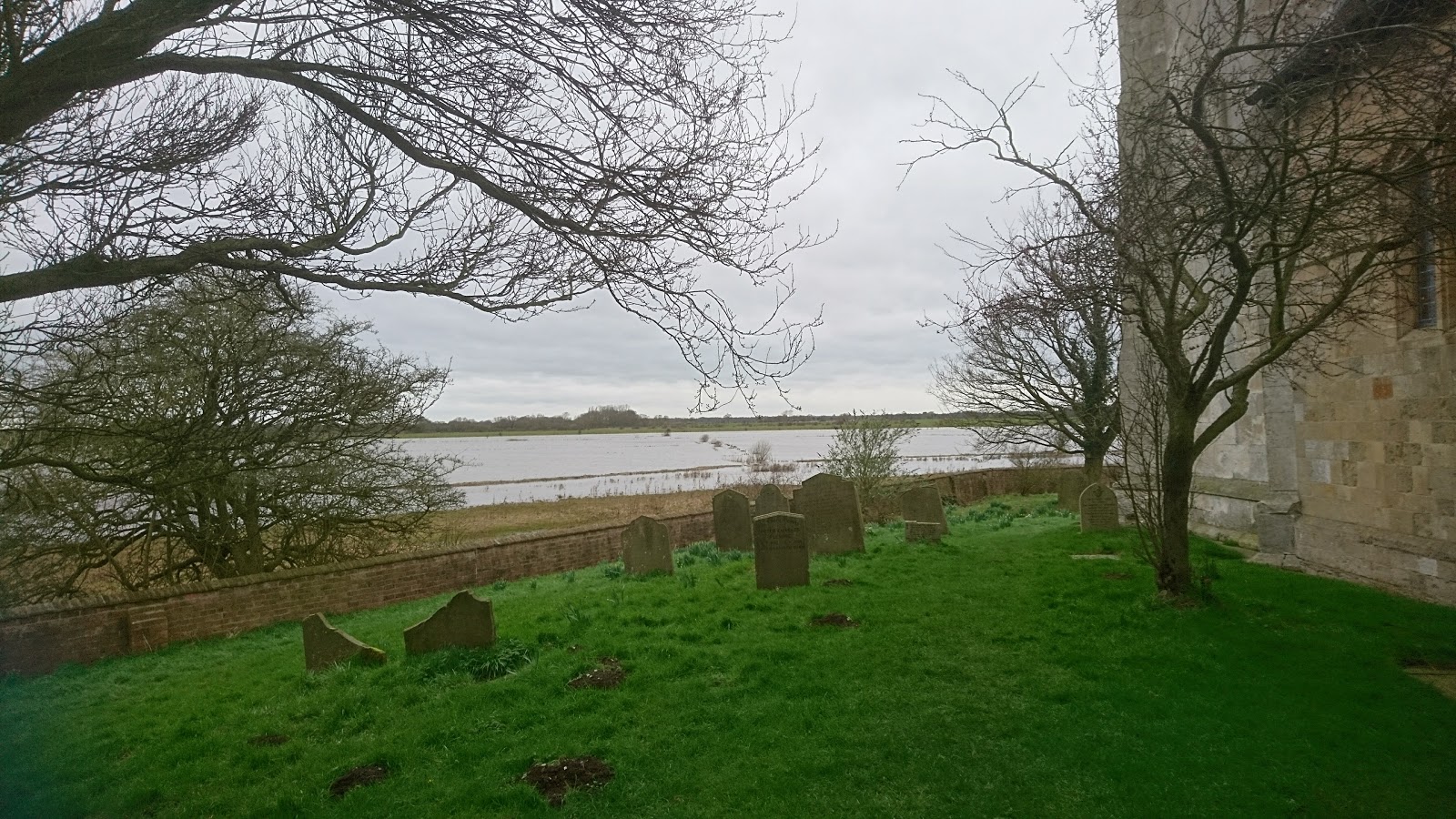
Ellerton was quiet, so I headed down to Aughton. Aughton Church really is a delightful place to bird from, and I was serenaded by the church choir accompanied by a bugling herd of 19 Whooper Swans just beyond the church wall. The swans eyed me with suspicion at first, but soon settled down to a bit of feeding and displaying. It was interesting how amber-stained some of the adult's necks were and yet some were persil-white. Perhaps the former nested on more peaty pools up in Iceland which had tainted their feathers. Only one second calendar year bird with this gang, suggesting the other pairs had booted out their young already or had had a poor season last year.


145 Pochard were out on the deeper water, with half the number of Tufted Ducks and a solitary Little Grebe. Four Oystercatchers round at North Duffield Carrs were the only other birds of note, before the rain came and I headed home.


Saturday, 4 March 2017

Movie Shrike

I tried for a bit of phonescoped video today...


The Sentinel Returns

After seeding the path in the stubble field for our later quest, Emanuela and me spent two hours trudging round Hagg Wood on Wednesday morning looking for the Arctic Redpoll again, but to no avail. We didn't even see a single Redpoll! A lone calling Willow Tit, a few Siskins and a couple of screeching Jays was the best, though early spring in a wood was a nice change, with birdsong filling the air. We headed over to the fields to look for the Pine Bunting which had hopefully been attracted to the seed I laid down earlier. Sadly it was nowhere to be seen. After a couple of fruitless hours checking the paddock by the housing estate (Kerver Lane) we went back to the stubble field. A Corn Bunting, several Tree Sparrows, c15 Yellowhammers, two Bramblings and a few Chaffinches were now visiting the seed. But no Pine Bunting! I noticed Yellowhammers coming in from the west and dropping on the hedge. And suddenly, there it was, the Pine Bunting, sitting on top of the hedge. I called it and Emanuela and Peter got on to it. After 30 seconds, it flew off the hedge and dropped into the middle of the stubble field in the long grass - doh! It was about the only bird that shunned the seed. Unbelievable. Anyway, it was nice to see this little chap after a few weeks. It is really starting to look very smart too now.

Today, I had to pop over to Acaster to pick up some stuff, so with clearing skies - at last - I bobbed down the airfield to have a look for the Great Grey Shrike. Having gone AWOL for a bit, she had turned up again at the end of last week and it took no time at all to find her, busily hunting from her favourite bushes and trees. During the time I watched her, she again caught a Field Vole, which she took back to the scrub by the entrance to the yard. She was soon back out hunting again. A circling Red Kite was nice and the only other sighting of note.


Saturday, 25 February 2017

Early spring

A couple of hours in the LDV this morning was tough going but enjoyable. North Duffield Carrs was wildfowl free bizarrely, but still held 39 Curlew and five Oystercatchers. 22 Shelduck flew in just before I flew out. No sign of any Smew at Aughton and diving duck numbers were down.
Ellerton was quiet and the refuge at Wheldrake held 132 Coot and the Drake Scaup. A Peregrine was hunting over the Ings and flushed 23 Black-tailed Godwits and 24 Curlew. I headed round to the Low Grounds, pausing briefly at Hagg Bridge to check out a Little Egret. The pair of Avocets were still loafing in the middle of the flood, a fine find by Adam Firth earlier.
The Pine Bunting didn't show for me at Dunnington although two Bramblings were nice. The bunt showed up later.

Friday, 24 February 2017

Scarbados

Met up with Paul at the airfield early doors to have a look at the Shrike, but sadly she had gone AWOL. Storm Doris had abated overnight and it was a lovely, calm sunny morning, the cool air full of the sound of Song Thrushes and Skylarks. It was great to be out, but after an hour our only reward was a small covey of Grey Partridges.

Home to collect the gang and off east to Scarbados. The skies were clear and a light westerly meant it was almost balmy on the beach, well, about 8 degrees.


The kids and dog enjoyed a good scamper about before we got into the wildlife with fine views of the Peregrine pair on the cliffs, the female of which was hungrily devouring a pigeon. Sol loved the gore of it. Several Harbour Porpoises were searching the break looking for bass and the kids got good views. In the harbour, a fine adult Shag was hanging out on some steps, and nearby the lingering Great Northern Diver cruised around.


 The diver started feeding after a bit, and shortly brought up a Shore Crab which it shook about to remove the legs before swallowing.

 
Harder to find was the diminutive Black-necked Grebe, but after a chippy lunch, we spied the red-eyed fluffball busily feeding among the boats. It really motored around and took some effort to keep up with it.


About 20 Turnstones were seeking discarded chips and at least three sported some fine leg bling.

It is rude to be out east on such a fine early spring day and not pop into Wykeham on the way back, to see what avian monsters are at large. Sure enough, after a bit of patience and a number of sites, I picked up three adult Goshawks (two females and one male) engaged in some serious display. At one point all three were perched up in separate trees, one of which rather clumsily clambered around on the branches, white undertail coverts exploding everywhere. Although the views through the scope were cool, they were just a bit too far for phone scoping, but I gave it a try anyway...


 We headed back after a top day. It turned out the Shrike was still present, having been seen near Ebor Trucks at midday.

Wednesday, 22 February 2017

Great Grey Days

Had a quick lunchtime visit to the airfield again, to see if the shrike was still about. Despite no news and the disconsolate body-language of a few wandering birders who didn't appear to have seen her (I have decided, probably incorrectly, that she is a female!), I soon found the bird atop a Hawthorn by the entrance to the yard just south of Ebor Trucks. She again allowed close approach but sadly the light wasn't great for photography.


After scanning around in that Shrikey way they do, she flew into a young Ash where the light was better. She didn't seem too happy perching amid slender, swaying stems as this wasn't befitting a northern tyrant, so after a few moments she bounded across the road and off across the grassy field alighting atop a large bush, with commanding views. Much more suitable! I left the other birders to it and headed off to walk to dog.


Saturday, 18 February 2017

York Gull Watch and Shrike Seconds

Helped with the York Birding Club Gull Watch at Rufforth this morning. A great turn out of about 25 birders. Sadly, the gulls were not behaving with the majority remaining on the Tip. Nevertheless we picked out two first winter Glaucous Gulls and a second winter Lesser Black-backed Gull among the hordes of Herring Gulls. Not many Great Black-backs about, presumably many have headed back north and east. A large flock of c50 Fieldfares went north late morning.


The second Glauc hiding in the flock.
Chris, Emanuela and me then headed down to Acaster Airfield and after a walk, Emanuela relocated the Great Grey Shrike at a distance. She was very pleased as this was a tick for her. It hunted along the hedge to the south of the truck depot and came pretty close. At one point it caught a vole which it immediately flew off with in its beak into the thick scrub near the Ebor Trucks entrance. It disappeared into the bushes and then a few minutes later flew back out without the vole. It had presumably cached it in its larder. Cool. It then carried on hunting. Quite a few birders turned up to see it and it was good to see some familiar faces.


Phone-scoped Shrike.

Friday, 17 February 2017

Northern Sentinel

A rumour of a local Great Grey Shrike came true today down at Acaster Airfield when it was relocated near Ebor Trucks. The lure of lunchtime twitching was too much so three of us shot down there from the office at lunch. Sadly the few birders on site had not seen it for a few hours so we spread out to search. The air was full of the spring song of Skylarks and Yellowhammers, it was a joy to be away from my desk. No sign in the usual area we headed south down the road to check more bushes. The sinking feeling set in - this wouldn't be the first time I had dipped a GGS in this area!
Scanning back towards the truck depot and there it was, sitting sentinel-like on the very top of an Ash! Fab! Quick scope views all round then we drove back up the road to get a closer look. The shrike was not at all concerned by our presence and I managed to get a couple of shots. Something was clearly attracting it's attention in a nearby patch of scrub and after a couple of minutes of intense staring, it dived groundwards into the blackthorn patch and vanished. The other birders who I had whistled arrived and soon I picked it up again more distantly on top of an Oak at the back of the field. It continued to move around and after a few minutes came back towards us, perching on a Spruce and then a Birch. Lunchtime twitching rewarded, smiles all round and back to the office to carry on working for Yorkshire's wildlife. Well done Alan Swain for relocating the bird today.


Saturday, 11 February 2017

Craving blue sky

Enough of this dreary, cold, wet weather it is doing my head in! Nevertheless, spring is just starting to peek through, with Skylarks, Song Thrushes, Dunnocks and the odd Blackbird now adding their voices to the Great Tits and Robins that are already singing. Winter aconites are blooming here and there, splashing glorious mustard yellow along the foot of the hedge.

Yesterday, 11 Waxwings were trilling away from a treetop outside the petrol station near St Helen's Road junction in York, a nice surprise on a lunchtime walk.

Today, accompanied by Sol, I headed up to Castle Howard mid-morning, to see what the east wind had blown in. Pretty dire weather, but reasonable birding, with one Tundra Bean Goose on the water with four Pinkfeet, plus two female Scaup (first winter and adult by the looks of it), 12 Goosanders, four Mandarin (3 males, 1 female), one lonely-looking female Pintail, and a pair of Shovelers, besides the usual cast. A couple of Great Crested Grebes were back on territory, plus several noisy Nuthatches and nest-building Cormorants added to the spring feeling in spite of the parky climate. A Marsh Tit and Redpoll (Lesser or Mealy, now in doesn't matter apparently) showed close by. Most frustratingly, a small skein of nine dark grey geese flew off into the distance and failed to reveal themselves. They could have been the rest of the Beans that have been around but I wasn't sure. The five geese flew into the field and after a bit, sat down and went to sleep.


From Top: Sol and the Mute Swans, Scaup duo, Goosander trio and sleepy Tundra Bean Goose, minus legs.

It started raining again and Sol got bored after a bit, so we headed home.


Monday, 30 January 2017

Owls about


My daughter and wife reported seeing a Barn Owl near the south end of Naburn Sewage Works yesterday afternoon. This was quite exciting news as it was close to where I had assisted Yorkshire Water in putting a Barn Owl Box up on an old abandoned building on their land and adjacent to the rough grassy field. I bobbed down there as the light began to fail and sure enough at 5.05pm the ghostly shape of a hunting Barn Owl floated in to view. It didn’t appear to come from the box, but it may have got out without me seeing it. The bird did a circuit of the field and I watched with my bins from the footpath. Amazingly, it flew straight towards me, coming so close that I couldn’t focus my bins. I lowered them to look and in doing so revealed my face, which startled the owl, which did a quick u turn and went back the way it came. It is always a privilege to see one of these beautiful birds and I am delighted there is one around here that might just use that box. On the walk back, a couple of Tawny Owls were hooting loudly from the large Willows by the river and the usual Grey Partridge was creaking away in the fields near Bridge Farm.

Saturday, 28 January 2017

After the Rain

The rain stopped by lunchtime so I headed out for an hour at Rufforth with the gulls. Two first winter Glaucous Gulls lumbered over the tip and nearby an advanced first winter Iceland Gull was sitting in a field. The bird had a dark eye and quite a lot of brown markings on the upper parts, so I assume I aged it correctly... Later, a Glaucous Gull was in the field just across the road from the tip which may have one of the earlier birds. Another gull looked quite interesting, with a dark eye and weedy green-yellow bill, although I decided it wasn't a Casp as the head shape just didn't look right.

  
Glaucous Gull with a dirty beak.

 
Iceland Gull with an advanced beak, like a Glauc!

On Dringhouses Pond a Great Crested Grebe was present along with 14 Coots. No sign of the former on the bird race three weeks ago.