Having dipped Papuan Frogmouth up on the Daintree, my last chance of one of these freaky birds came along on our last morning down under. Centennial Park in Sydney is a known site for Tawny Frogmouth, but it is a big place and they are cryptically-marked and roost motionless during the day up against a tree trunk, pretending to be a bit of bark.
As luck would have it, I bumped into Biggles, a local birder, as I arrived and he had seen four Frogmouths the day before. Great! He spent a few minutes explaining to me how to find the roost site before realising how confused I was, and very kindly he offered to show me. After a ten minute walk, we got to a large patch of Paperbarks, where there was a collosal roost of Grey-headed Flying Foxes - cool!
A little further on, and Biggles asked me if I could see the Frogmouth - of course I couldn't. But as he pointed, I made out a grey bulge on the side of a tree about five metres away, and there was my first Tawny Frogmouth! Fantastic! The bird casually half opened an eye to check us out, but other than that didn't move at all, relying on its camouflage to avoid detection.
Awesome Tawny Frogmouth
Biggles carried on a little further and found a second bird. It was a bit more obscured but was facing us, so we could see its underparts. Again, it casually opened an eye to check whether we were a threat or not, before dozing off again.
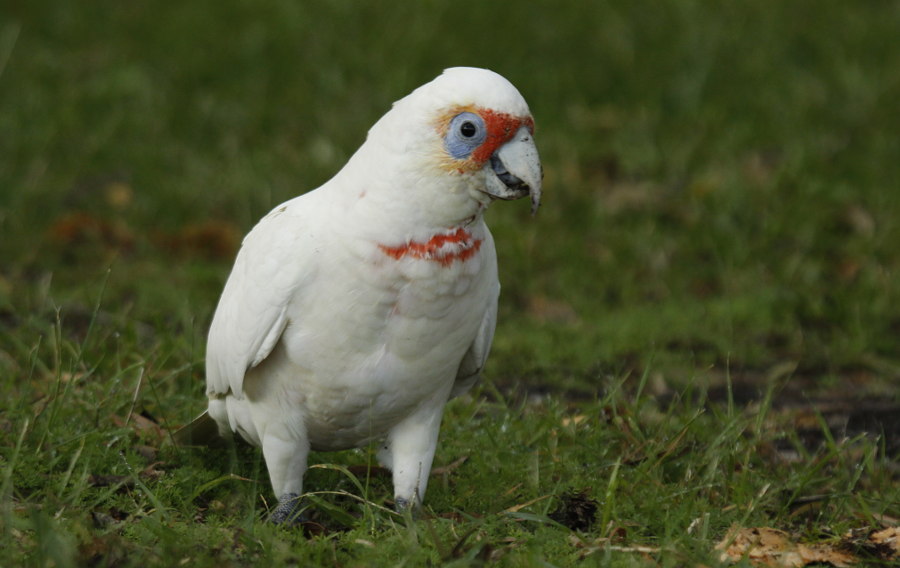
Really cool birds. We couldn't find the other two of the family group, but I didn't mind. We went our separate ways and I wondered around for an hour before heading back to meet the family. I managed to add a few new birds to the list including Long-billed Corella, Australian Darter and Brown Goshawk.
Black Swan glancing at a Hardhead. Nice to see these guys in their native country for once, rather than on the Ings!
Immature Brown Goshawk causing absolute panic in the park. Trailing a leg, bizarrely.
Crested Pigeon. Dead common in Oz, but always cracking to see.
Dusky Moorhen
Grey Teal. Very similar to Chestnut Teal.
Hardhead. A pretty cool Fudge-like Aythya.
Little Black Cormorant
Long-billed Corella
Aussie Darter
Yellow-tailed Black Cockatoos.
Sunday, 7 May 2017
Monday, 1 May 2017
Black Tern 2
Out birding locally again, albeit briefly. The east wind continues, but has lightened and the sun shone. The tern and wader passage has eased, but many Black Terns are still around. One or two drift migrants are arriving on the coast now, notably a Wryneck at Buckton.
The Black Tern was still knocking about at Heslington East at lunchtime and came close occasionally. As ever, a really lovely bird.
Tricky to photograph into the light and when you don't really know how to use a camera!
On to Wheldrake, where three Whimbrel dropped in early afternoon in front of Tower Hide. A Hobby was hawking about, and a hunting Marsh Harrier flushed up the ducks - c170 Teal, c50 Wigeon and c40 Gadwall. Red Kite and Garden Warbler also noted.
The Black Tern was still knocking about at Heslington East at lunchtime and came close occasionally. As ever, a really lovely bird.
Tricky to photograph into the light and when you don't really know how to use a camera!
On to Wheldrake, where three Whimbrel dropped in early afternoon in front of Tower Hide. A Hobby was hawking about, and a hunting Marsh Harrier flushed up the ducks - c170 Teal, c50 Wigeon and c40 Gadwall. Red Kite and Garden Warbler also noted.
Sunday, 30 April 2017
Down Under Part Five: Birding Queensland 4 and New South Wales
From the Tablelands we headed southeast to Townsville and on to Magnetic Island to look (successfully) for Koalas. A few new birds added to the list, notably Bush Stone-curlew, which were common on the island, especially once it got dark.
Magnetic Island. Viewed from the Forts Walk, near where we saw Koalas.
Pied Cormorant, Magnetic Island
Sulphur-crested Cockatoo - nesting in a broken-off palm in Townsville.
Back on the mainland, we drove up to Etty Bay, pausing briefly at Tyto Wetlands, where we added Green Pygmy Goose to the trip list. We had got a tip-off that Etty Bay (just south of Innisfail) was a good bet for Southern Cassowary, and sure enough as we drove in, Addie suddenly shouted "there's one!" and sure enough, one of these incredible, prehistoric-looking ratites was casually strolling along the edge of the beach!
Etty Bay. A little cove backed by a campsite and surrounded by rainforest. The local Cassowary pair seem to walk a circuit and so every hour or so, they wander along the beach, oblivious to any people that happen to be hanging out. Birding was good in and around Etty Bay, with Rose-crowned Fruit-doves noticeable.
Rose-crowned Fruit-doves
After a brief visit to Cairns, we headed north up to Port Douglas where we went out on the Daintree River. We managed two of our main three targets, Little Kingfisher and Great-billed Heron, but missed Papuan Frogmouth. We saw one big Saltwater Crocodile sunbathing in the morning sun, and added a bonus bird in the form of a Pied Monarch. A number of other good birds were seen including Grey Goshawk, Radjah Shelduck, Wompoo Fruit-dove, Shining Flycatcher and Azure Kingfisher.
Great-billed Heron- the last time I saw one of these shy and rare herons was on Flores in 1997, Azure Kingfisher and male Shining Flycatcher. I would really recommend Murray Hunt, the Daintree Boatman, who knows the birds and other wildlife.
Magnetic Island. Viewed from the Forts Walk, near where we saw Koalas.
Pied Cormorant, Magnetic Island
Sulphur-crested Cockatoo - nesting in a broken-off palm in Townsville.
Back on the mainland, we drove up to Etty Bay, pausing briefly at Tyto Wetlands, where we added Green Pygmy Goose to the trip list. We had got a tip-off that Etty Bay (just south of Innisfail) was a good bet for Southern Cassowary, and sure enough as we drove in, Addie suddenly shouted "there's one!" and sure enough, one of these incredible, prehistoric-looking ratites was casually strolling along the edge of the beach!
Etty Bay. A little cove backed by a campsite and surrounded by rainforest. The local Cassowary pair seem to walk a circuit and so every hour or so, they wander along the beach, oblivious to any people that happen to be hanging out. Birding was good in and around Etty Bay, with Rose-crowned Fruit-doves noticeable.
Rose-crowned Fruit-doves
After a brief visit to Cairns, we headed north up to Port Douglas where we went out on the Daintree River. We managed two of our main three targets, Little Kingfisher and Great-billed Heron, but missed Papuan Frogmouth. We saw one big Saltwater Crocodile sunbathing in the morning sun, and added a bonus bird in the form of a Pied Monarch. A number of other good birds were seen including Grey Goshawk, Radjah Shelduck, Wompoo Fruit-dove, Shining Flycatcher and Azure Kingfisher.
Great-billed Heron- the last time I saw one of these shy and rare herons was on Flores in 1997, Azure Kingfisher and male Shining Flycatcher. I would really recommend Murray Hunt, the Daintree Boatman, who knows the birds and other wildlife.
Back in Black
Three visits to the local patch since I've been back from Australia. Not a lot doing on Thursday evening, although I was surprised by the amount of wintering wildfowl still present at YWT Wheldrake Ings. At least seven Pintail were among well over a hundred Wigeon and probably 150 Teal, along with six Pink-footed Geese. A Peregrine was hunting over the marshes, adding to the wintery feel. My first Blackcaps, Sedge Warblers, House Martins and Whitethroats of the year had other ideas though!
The Pool. Greening up.
Yesterday, headed down to Wheldrake Ings again during the afternoon and one of the first birds I picked up from Tower Hide was a Wood Sandpiper, walking about in the wet grassland out front. After a few minutes, it took off and calling repeatedly, flew towards Bank Island. A great start! I walked round to Swantail, where ten Whimbrel dropped in mid afternoon, and a Hobby hunted over the pool, picking off insects. One of the Whimbrel was colour-ringed; I will see if this individual is known. A Marsh Harrier went through, flushing the Whimbrel briefly, and putting up two Snipe out of the marsh. A Red Kite hunted over the Low Grounds and Reed Warblers sang from the recently restored reedbed.
Whimbrel. A Spring Wheldrake speciality, but usually seen at dusk, so nice to see this group in good light.
Today, the freshening southeasterly wind was full of promise, so I headed east to Flamborough early. The wind was too fresh on the coast, sadly, and after a walk round Old Fall, all I saw was a first summer Mediterranean Gull that cruised past along the cliffs, and a Yellow Wagtail flying west. Lee found a male Redstart near where I parked, so I headed back there and after a few moments got good views as it dived out of the hedge to pick insects from the ploughed field. Lee and Andy seemed fairly disconsolate, so with a heavy passage of terns and waders going on inland, I decided to turn tail and head back to the LDV.
Went clockwise round the LDV. The refuge looked good from East Cottingwith, but was devoid of birds. Aughton was virtually dry apart from the scrape which held a solitary Redshank. North Duffield Carrs proved to be better, with three Greenshank cavorting around on the remaining patches of flood water. I headed to Bank Island to stake out the large patch of water there, and after half an hour a tern suddenly appeared. It looked promising for Arctic, so I switched to my scope and sure enough it was. It circled the flood for a moment then headed off high over the Low Grounds towards Wheldrake. Shortly, a message came that there was a Black Tern at Hes East! Back in the car and off I went. The Black Tern was still present on arrival ten minutes later, in the company of a group of Sterna terns. In the bright light I was fooled in to thinking they were Arctics and announced this to Jan and Mike who were present. Most headed down to the raft where they rested. I got my scope on them and was still convinced some were Arctics - at least they should be - but with better views I realised that remarkably, they were all Commons.There were 16 in all. I did see one bird briefly that could have been an Arctic, with long tail streamers and very silvery upperwings, but I didn't pin it down. The Black Tern showed really well, hawking up and down until about 12.05 when it went and joined the terns on the raft. Really cool that York got in on the big movement. It makes me wonder how many Common Terns were involved along with the Arctics as only the latter were reported.
Wednesday, 26 April 2017
Down Under Part Four: Birding Queensland 3 - Mareeba
Spent a day out in the Mareeba area. The wetlands, well, the lake, was very attractive but entirely devoid of birds. This was due to the time of year being the end of the wet season meaning the wetland birds are spread out over a vast area. The only wildfowl we saw were on some shallow floods on the drive in. The site is run by a private lodge so you have to pay to visit and walk round the lake. There is a good cafe and toilets. It was very hot in the middle of the day when we arrived and whilst I walked round the lake the rest of the family gave up due to the heat and the fee was wasted really. We should have worked this out before paying, as visiting the cafe was free. Birding round the lake revealed some new stuff typical of drier ground. Vicky saw a big Frilled Lizard on the entrance road and we all saw a young one close to the cafe.
Frilled Lizard
From here we went to Granite Gorge just west of Mareeba. A scenic place partly run as a zoo and campsite. For a few dollars you can explore the area, see the Mareeba Rock Wallabies and check out a few birds.
Blue-winged Kookaburra. Our only sighting of this cool bird was on the approach track to Mareeba Wetlands.
Double-barred Finches were common but I failed to find any Black-throated Finches.
Pink-eared Ducks (and a Chestnut Teal). These are seriously cool ducks, with a weird leathery flap under the bill tip.
Red-winged Parrot
Red-backed Fairy-wren. Poor photo of a common bird around the lake, but hard to get close to the males! A stonking little bird.
Squatter Pigeon. Not an easy bird, so great to see a couple of confiding individuals at Granite Gorge.
From here we went to Granite Gorge just west of Mareeba. A scenic place partly run as a zoo and campsite. For a few dollars you can explore the area, see the Mareeba Rock Wallabies and check out a few birds.
Blue-winged Kookaburra. Our only sighting of this cool bird was on the approach track to Mareeba Wetlands.
Double-barred Finches were common but I failed to find any Black-throated Finches.
Pink-eared Ducks (and a Chestnut Teal). These are seriously cool ducks, with a weird leathery flap under the bill tip.
Red-winged Parrot
Red-backed Fairy-wren. Poor photo of a common bird around the lake, but hard to get close to the males! A stonking little bird.
Squatter Pigeon. Not an easy bird, so great to see a couple of confiding individuals at Granite Gorge.
Subscribe to:
Posts (Atom)