Friday, 23 September 2022

Fastnet: Gateway to Pelagic Heaven

17th September

Saturday dawned bright, with a light northerly wind. We birded The Waist seeing a few common migrants: Blackcaps, Willow Warblers, Chiffchaffs, Siskins and a Redpoll. Breakfast was a bit slow, but we soon found our way to the quay to meet our skipper MichaĆ©l O’Cadogan and his good ship ‘An GeascaneĆ”n. 


 A few Harbour Porpoises surfaced on the way out to Fastnet Lighthouse, three miles southwest of Cape Clear. This iconic spot was thronged with Kittiwakes and other gulls and we scrutinised them for a Sabine's, though unsuccessfully. Still, it was cool to see this lighthouse up close.

Up to now, we had seen very little in the way of pelagic birds, but Fastnet proved to be a gateway to something very special. A few miles further on, out of nowhere a handsome Great Shearwater appeared and gave us a breathtaking fly-past. A lifer for many of the group, this elicited beaming smiles, but little did we know about what was up ahead!
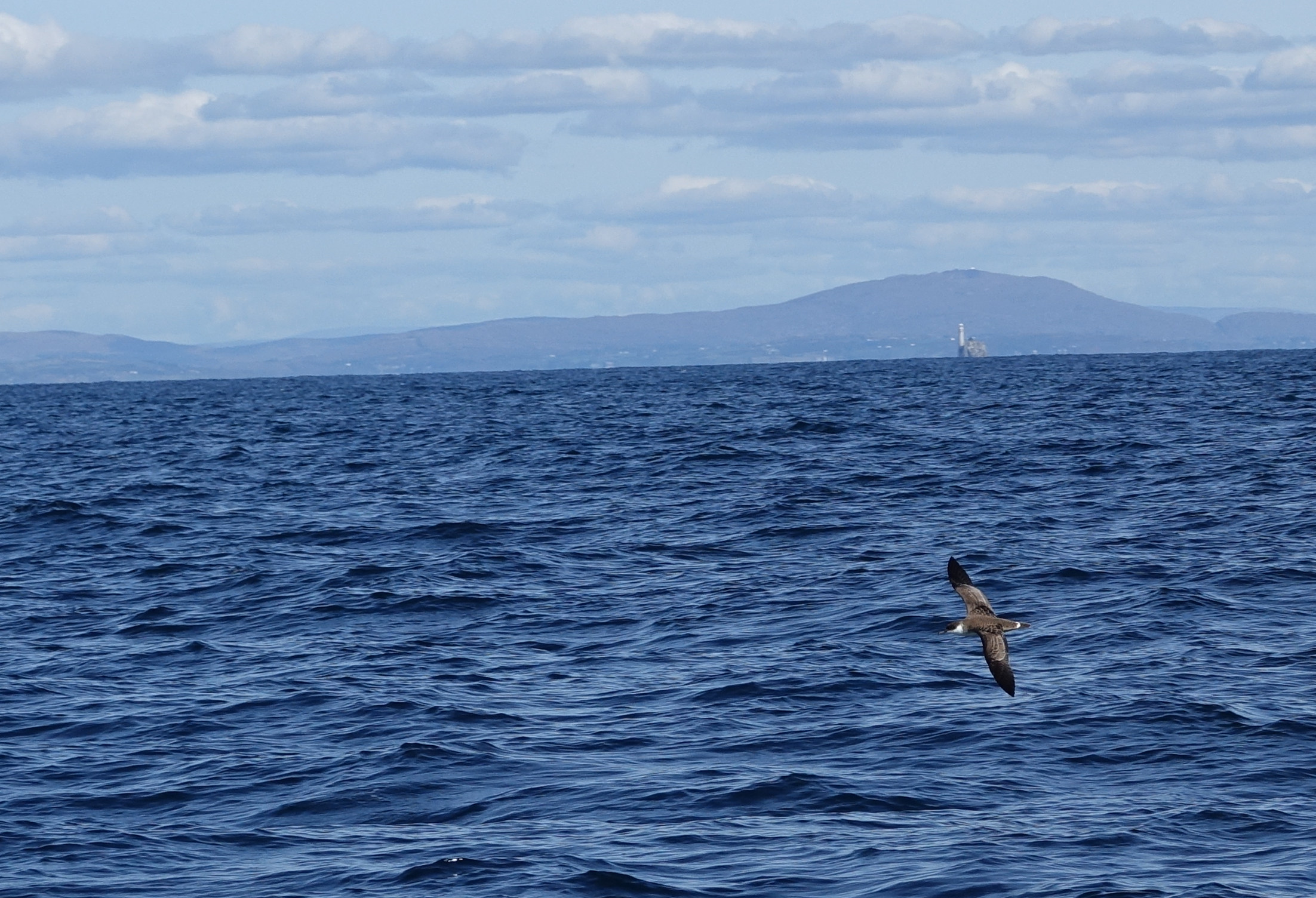

 The first Great Shearwater, with Fastnet in the background

A little further on and Paul and me could see a lot of bird activity. Short-beaked Common Dolphins appeared, coming in close to the boat to the delight of the group. Another Great Shear came in for a look at us - presumably smelling our chum bucket! A Sooty Shearwater followed, looking chocolatey brown in the morning sunshine. 


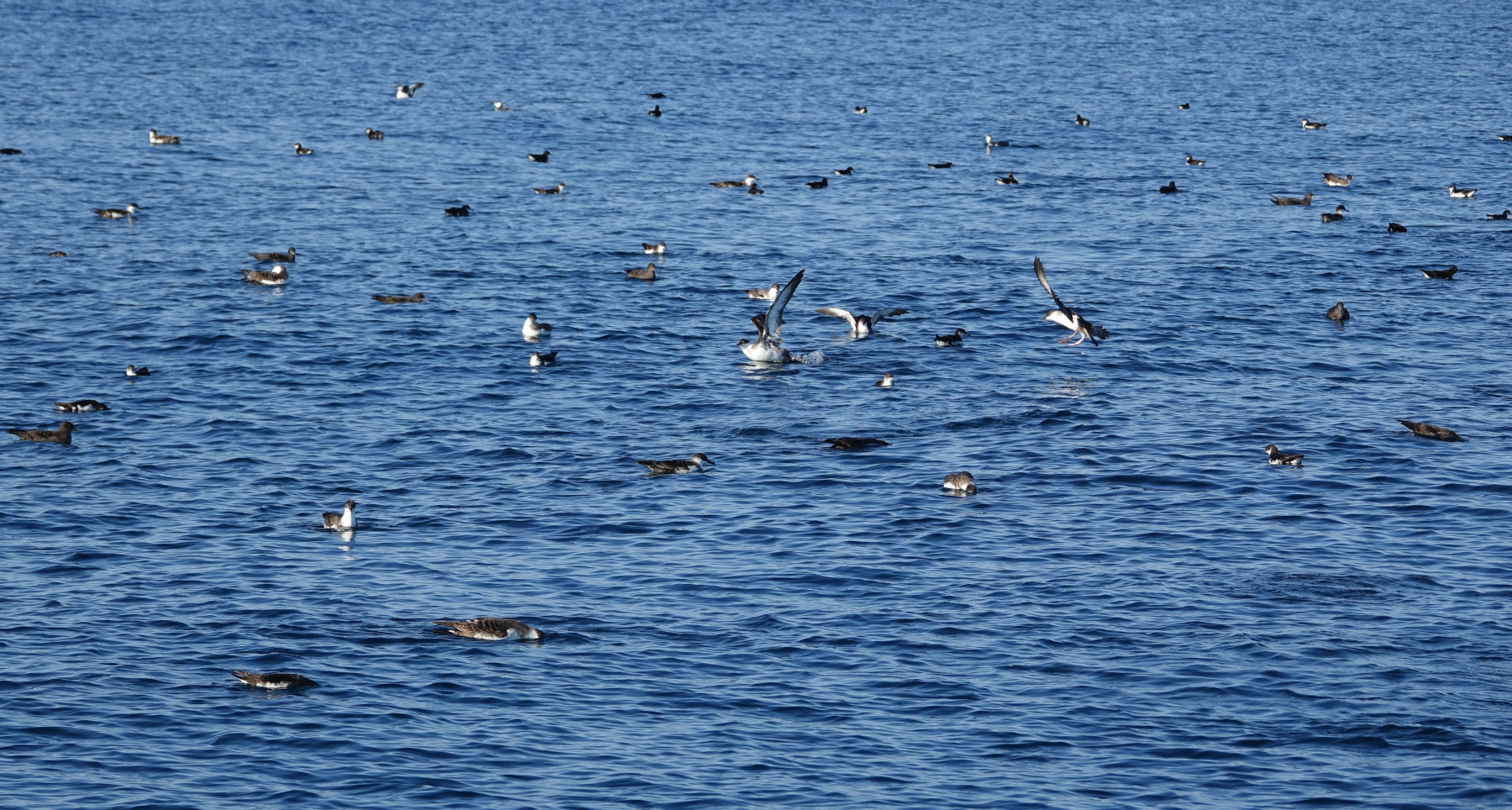
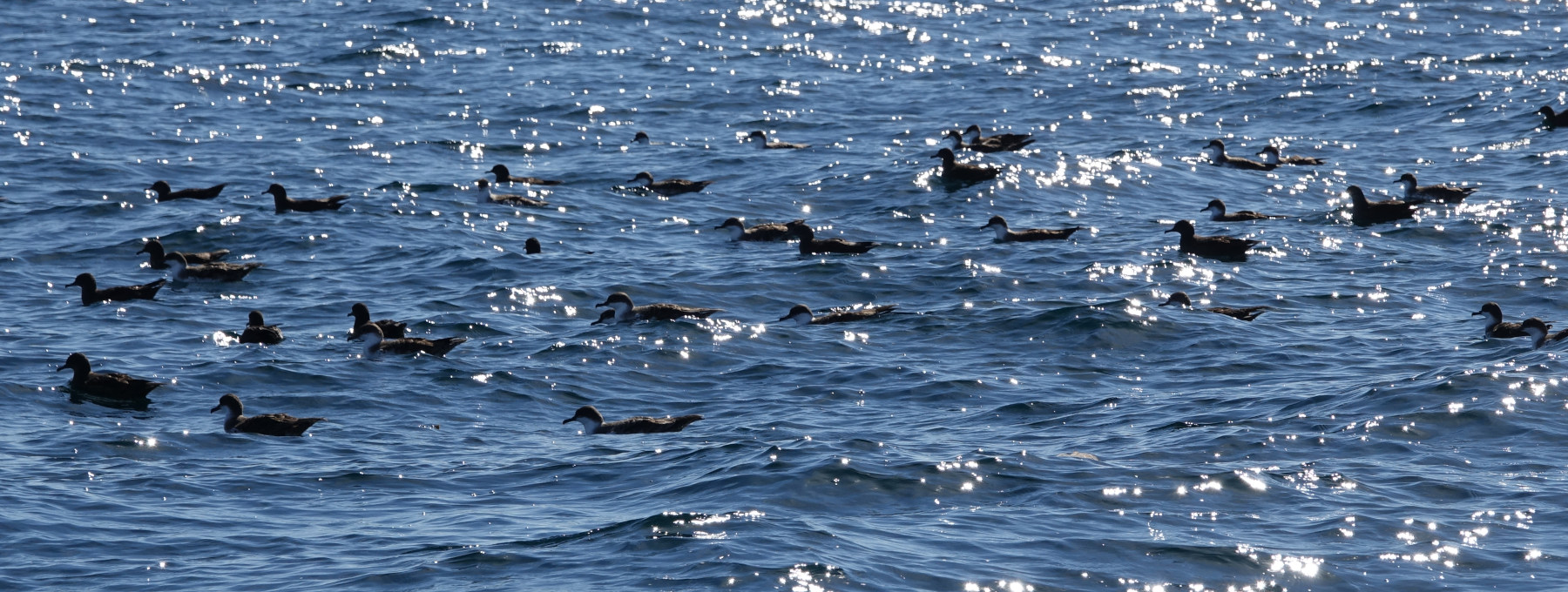
This was feeling promising! Up ahead there were birds on the water. Shearwaters! Michael slowed the boat to a crawl and we drifted into a large raft of shearwaters. I had seen rafts of Manx Shearwaters off the Scilly Isles previously, with a few Great and Sooty Shearwaters thrown in, but this was something else. About 40% were Great Shears, 40% Sooties and 20% Manx! There were literally hundreds of birds present and the chuckling and squeaking calls were all around. Dolphins surfaced among them, bumping them out of the way and soon a shout went up for 'whale' and the familar profile of a large Minke Whale broke the surface. A European Storm Petrel suddenly appeared, flickering across the water, followed by another a few moments later. There were birds everywhere: on the horizon a continual band of large shearwaters headed east and here and there further large rafts of shearwaters loafed in the morning sun. 'Our' raft held over 800 birds, but with the amount of activity elsewhere, there must have been a couple of thousand Great and Sooty Shearwaters in the vicinity. Absolutely mindblowing!


 Minke Whale and Common Dolphin
Above: A Bonxie nails a Great Shearwater


I looked around the boat and the whole group was beaming. This was worth the three year wait and then some. I scrutinised the rafts and passing birds as carefully as I could, desperately hoping for a Fea's Petrel or something else. A Cory's Shearwater appeared briefly and disappeared just as quickly; it was our only sighting of the trip. Suddenly, a large bushy blow went skywards from the back of the flock and the huge arched back of a big Humpback Whale shattered the quiet. Wow! The leviathan blew four or five times, before arching his broad tailstock, and lifting his huge white fluke into the air, glistening in the sunshine, to a spontaneous round of applause from the group. He sounded and disappeared, only for another Humpback, a small individual to appear on the other side of the boat. This was getting crazy. 


In the distance, we spied a large trawler trailed by a big flock of gulls and other birds. Besides a few Bonxies, we'd not seen many skuas so we decided to intercept the trawler and see what was occurring. It turned out that he had mostly attracted a large group of gulls, but there were also loads of Great Shearwaters following on, a few Fulmars and Storm Petrels. He was gunning north so we followed him for a while, before he sped off into the distance. Somehow, time had really got on and we decided to head back to Cape Clear. 

What a trip this had been. We estimated at least a couple of thousand each of Great Shearwater and Sooty Shearwater, c500 Manx Shearwater, 15 Storm Petrels, eight Bonxies, two Humpbacks and eight Minke Whales. Not a bad start! That night, all I could think about was getting back out the next day...

Video

My Dad kindly leant me his camera so I could get some video.

I have put some videos on Youtube here.


Good things come to those who wait (two years!)

Thursday 15th September 

Thanks to the Covid 19 Pandemic, our August 2020 Irish Adventure had been postponed, not once, but twice, so it was with great relief and excitement that we finally got to make the trip. 

Co-led by Paul Connaughton the legendary seabirder from Shearwater Wildlife Tours and finder of two new seabirds for Ireland (South Polar Skua and Scopoli's Shearwater) and myself (very keen but pretty amateur seabirder and generally unable to find his way out of his bedroom in the dark), we had an intrepid group assembled from York Birding, all eager to set sail and see some of southern Ireland's delights.

Meeting Paul at Cork airport, we birded our way down to Clonakilty, visiting several estuary and beach sites (highlight Curlew Sandpiper and Pale-bellied Brents), along with the mighty Old Head of Kinsale, where we notched up our first Choughs of the trip, two Peregrines and a surprise Irish Hare. 

Wheeling Choughs

Pale-bellied Brent Geese

....

Friday 16th September

Up early, we were on Galley Head for dawn, to watch a spectacular sunrise over the Irish Sea. Good numbers of Meadow Pipits were around, along with a few Wheatears. A fly-past Whimbrel was the only one of the trip and a distant Osprey tantalised high over the bay to the south. 

It was quiet on the head really and frustrating that the end of the peninsula was private, just like Kinsale, which must be very frustrating for local birders. We pressed on to the delightfully-named Shite Lane at Dundeady, which has held a range of Yank landbirds and recently an Aquatic Warbler. More migrants were present here, such as Blackcaps and Chiffchaffs, but not a sniff of scarce. 

After breakfast back at O'Donovans, we checked out and headed south via a few estuaries. White's Marsh and Rosscarberry were good value, with Little Stints at each and a Curlew Sandpiper at the latter among a range of common waders. Frustratingly, the weather had been too benign to bring in any Yank waders, but it was enjoyable birding nonetheless. 

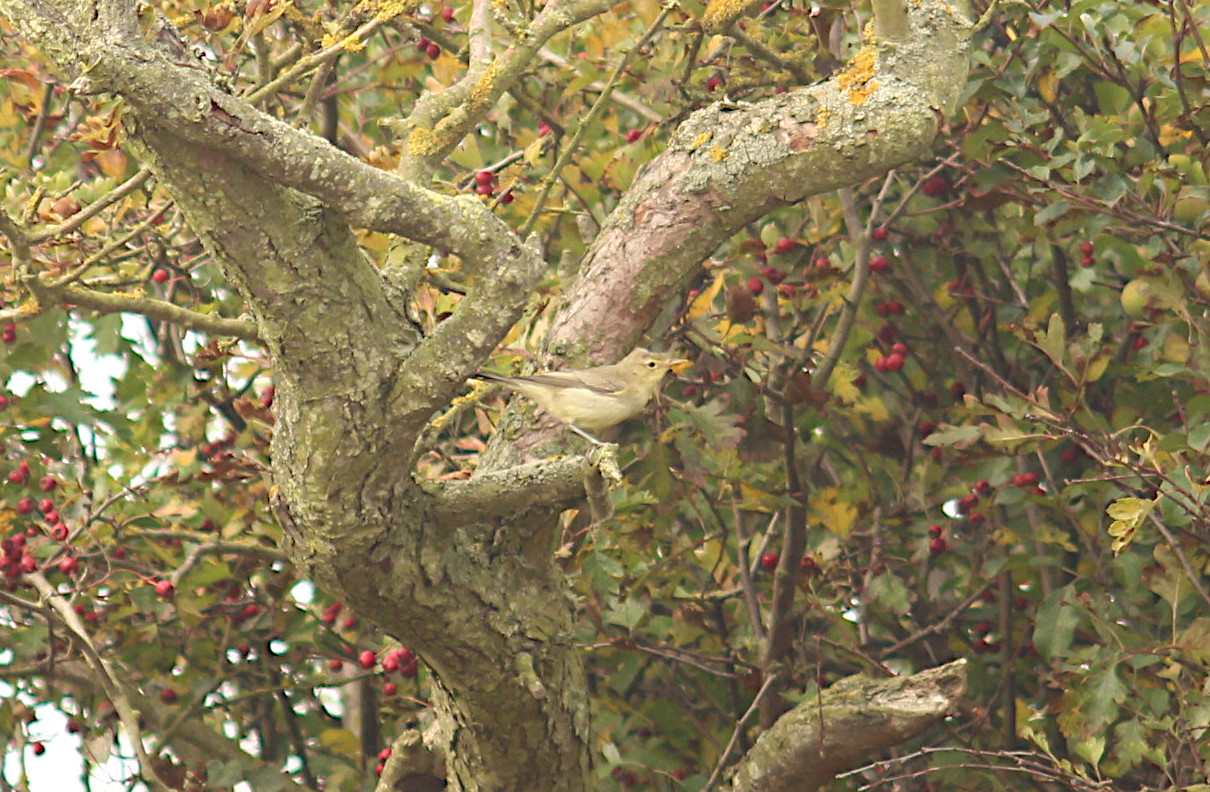
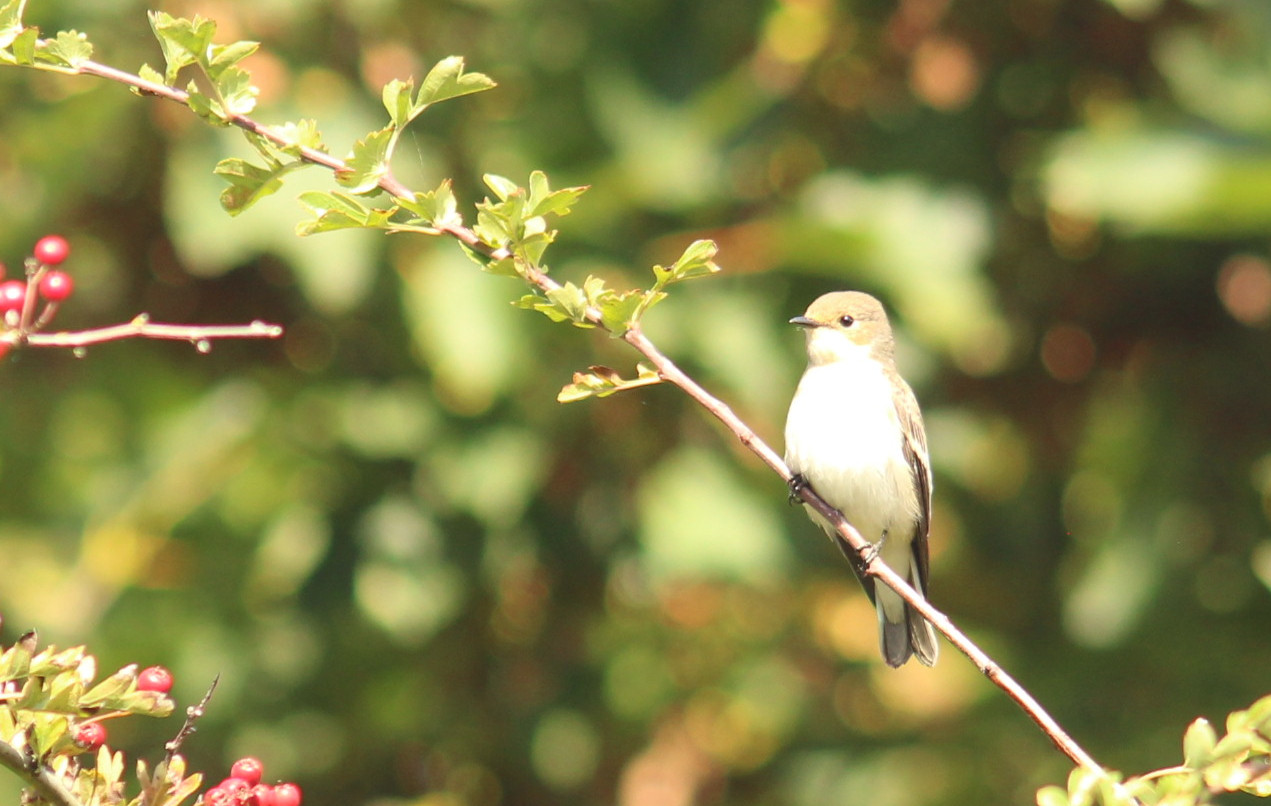
We found our way to Baltimore which to catch our ride to Cape Clear Island. The ride took 90 minutes or so, as we headed past the barren Skernish Island and round Cape Clear. A few white Black Guillemots were bobbing on the sea and a flock of feeding Kittiwakes were enjoyed, but little else of note was seen.Onto the island, our digs were great, overlooking the renowned Cotter's Garden, which has hosted Blue-winged Warbler and Ruby-Crowned Kinglet amongst piles of other rares. A Pied Flycatcher was flicking about in the large ash; a good start!

A walk before dinner in the pub was fairly quiet, with a Yellow Wagtail, a couple of Wheatears and a Whitethroat to show for our efforts, along with the local Choughs and Ravens, and countless Robins. 

After food and a few pints of Guiness, I headed to bed to dream of the seabirds that hopefully awaited us offshore the next day.

...


Thursday, 22 September 2022

Late-night Moth Twitch

An early night was planned before our long-awaited Irish adventure, but this all changed when Paz messaged to say he had caught a Clifden Nonpareil, a spectacular moth, nearby at Moreby. Paz kindly arranged to meet me in a layby at the next village of Naburn, so mounting my steed, I cycled along the dark, tree-lined cycletrack, across the river and along Howden Lane to meet him. 


What a majestic beast! After twitching one by train in Scarborough a couple of years ago I could not believe I was looking at one of these beauties within a ten minutes cycle ride of home. Thanks Paz!

Sunday, 11 September 2022

York Birding Trip: Flamborough Head, 11th September 2022


It had been a good week for birding the Yorkshire coast, with a big fall towards the end of the week grounding large numbers of Scandinavian migrants. So, it was good timing to be heading out for the YOC field trip to Flamborough this morning. Whilst waiting to assemble the troops in the lighthouse car park, we enjoyed a female Redstart on a fence at the back of the gorse field, plus two more on the western edge. A flyover Tree Pipit buzzed overhead, whilst many Meadow Pipits headed determinedly south, along with gangs of Swallows. First up, we looped down the new wild bird crop alongside the motorway hedge. Here, a flurry of warblers, included two Garden Warblers feeding on blackberries, an exquisite Lesser Whitethroat with two Common Whitethroat cousins, lemon-yellow Willow Warblers and a surprising Sedge Warbler. 

Looking seaward, a Hobby was spotted sitting atop one of the Fog Station towers. We next checked out the exposed shoreline, where single Knot and Dunlin were with a gathering of Turnstones, with the odd Curlew and Oystercatcher thrown in for good measure. Offshore, several Red-throated Divers, most in summer-plumage, were loafing with Guillemots and feeding Harbour Porpoises. A couple of Manx Shearwaters headed north, along with a lumbering Great Skua. More unexpected was a Gadwall heading south and a couple of Teal. 

The Bay Brambles and Golf Course Willows were quiet, though we saw the Hobby again, being mobbed by the local House Martins. It powered off over the rooftops. Two more Redstarts and a Pied Flycatcher showed well in the Golf Course Compound as we headed round to Old Fall. Little of note stirred in the northern Old Fall hedge, though the Hobby gave us a good show catching insects overhead, two Buzzards circled distantly and another Tree Pipit flew over. 


Hobby catching an insect


A Wheatear on the strawbales, hinted at what was round the corner. We checked out the southside of the plantation; several Wheatears were feeding in the stubble field, with a Brown Hare and another Redstart fed on the field edge. A Great Spotted Woodpecker announced itself by calling loudly as it flew overheard. 


 Round on the southside, we paused a while in this famously good spot. A fine male Redstart was showing along the hedge, with a more skulking female. A couple of Yellow Wagtails flew over and flocks of Linnets bounced around the stubble. A family of visitors made their way up the otherside of the hedge, pushing the Redstarts closer to us - great! 


A yellowy warbler dived in to the hawthorn in front; presumably a Willow? It then appeared on the edge of the bush, turned its head, revealing a big orange beak, pale lores and a curious peaked head- Icterine Warbler!! It then jumped up on to a dead branch right out in the open, enabling all of us to get cracking views. No way! We'd found a good bird. This was a lifer for some of the group which made it all the sweeter. After half a minute, having checked out its pale wing panel, long primary projection and thick blue-grey legs, it flicked off into the plantation, leaving us all beaming like Yorkshire cats. 

Our Icky!
 

The Hobby then gave us one last fly past. 


My phone beeped and to my surprise, Vicky had sent me a pic of what looked like a Pine Hawkmoth sitting on my drying shirt on the washing line! Nuts - this would be a first for our garden, so I messaged back asking her to please scoop it up in a tupperware. More of that later...

Very happy, we wandered back towards the lighthouse and lunch. Our third Tree Pipit flew over, but there was no sign of the Yellow-browed Warbler reported from the cottage gardens. 

After lunch, we checked out Thornwick Pool, where the juvenile Garganey was showing beautifully, preening right in front of the hide. The juvenile Little Stint was less obliging, feeding at the back of the pool. A solitary Tufted Duck, several Teal and Dunlin were at the pool too. We decided to do a loop of Thornwick, the clifftops and Holmes Gut. It was pretty quiet, with sunny skies and a strengthening southeaasterly sapping our energy. We ploughed on, with little more to show for our efforts.

Garganey, Dunlin, Mallard

Having managed to resist the temptation of a beer in The Viking, we waved goodbye to some of the group, then went back to the Outer Head to do one last scout round the lighthouse grasslands and the motorway. Little stirred though we half-heard what might have been a Yellow-browed Warbler. Three young Swallows sitting on the fence seemed quite content and watched us as we wandered back to our cars and departed. A fine day, in great company. 


....

So, that Hawkmoth.  I got back and to my delight, Vicky had contained this large insect in a pack lunch box. Gorgeous! I uploaded a pic to Twitter and somebody pointed out that this wasn't in fact a Pine Hawkmoth - which would have been a good find in our little garden - but an even more amazing Convolvulous Hawkmoth, something I'd only ever seen before at Spurn! Incredible. With a little gentle encouragement, it spread its wings revealing a lovely pink and black-striped abdomen. Thanks Vicky!


Saturday, 10 September 2022

Hooching

Quite often the highlight of my September visits to the east coast have been 'one Redstart' or a 'couple of Pied Flycatchers'. Yesterday, things were different, with easterly winds and rain creating the perfect conditions for a big fall of Scandinavian migrants at Flamborough Head late on Thursday. The headland was hooching with birds; Pied and Spotted Flycatchers sallied after insects from exposed branches and fences, Redstarts sat along hedgerows, dropping down into the grass to feed, whilst Wheatears bounded around the stubble fields. Overhead, bird of the day was a glorious Honey Buzzard, but I was in the wrong place when it cruised through. Over at Thornwick Pool, the dapper juvenile Little Stint was busily feeding with about a dozen Dunlins, whilst the juvenile Garganey was also still present. A smart Hobby circled South Landing later on, perhaps one of the last I will see this year. Having done the Old Fall circuit, Thornwick and Holmes Gut and South Landing, the migrants I saw were: Whinchat 2, Wheatear 30+, Pied Flycatcher 14, Spotted Flycatcher 4, Redstart 12, Reed Warbler, Garden Warbler, Lesser Whitethroat 5, Whitethroat 4, Willow Warbler 16, Chiffchaff 6, Siskin 4. Pretty awesome!

Hobby
Little Stint
Pied Flycatchers
Redstarts
Spotted Flycatcher
Reed Warbler


Sunday, 4 September 2022

Twoish Greenish

The weather had looked promising all week, with easterlies and some rain in the forecast for Friday-Saturday. The sea conditions were once again too rough to go out whalewatching, so awake at 05.15, I hauled myself out of bed and headed east to Flamborough. 


 It was a bit quiet on the way down to the lighthouse and apart from a Wheatear and a juvenile Yellow-legged Gull on the gold course, I hadn't seen much, so I opted for a seawatch. The wind had gone to southeasterly, so not great, but there was still a moderate passage with four Sooty Shearwaters, a dozen or so Arctic Skuas, a couple of lumbering Great Skuas and best of all a cold, pale juvenile Long-tailed Skua heading north. A Wheatear flew in off the sea and landed on the clifftop in front of me. Good numbers of Teal headed south and were joined by my first Wigeon of the autumn. 

Manx Shearwaters

Arctic Skuas. I started videoing this pair thinking they were Arctics but was intrigued by the trailing bird which looks slighter, with narrow wings and a long rear-end, hinting at Long-tailed. 

Juvenile Wheatear

By 10am, it had slowed considerably so headed off round Old Fall. The birding was good, though tricky in the keen wind. Pied Flycatchers and Whinchats zipped around after flies from low vantage points out of the wind, whilst the calls of Willow Warblers and Redstarts were enough to keep me motivated, scouring the hedgerows. News of the lingering Blyth's Reed Warbler at Bempton and Greenish Warbler at South Landing suggested birds hadn't departed, but very little 'new' was coming through on the info services, suggesting most of what I was seeing had been grounded for a few days. 

By lunchtime, I had a fair number of common migrants to show for my efforts and a juvenile Yellow-legged Gull on the golf course was nice, but I felt a little deflated after the levels of heady anticipation I'd had all week. I decided to go and have a look at the Greenish which had been relocated by Mark Pearson at South Landing. Opting for the long loop to get to where Mark had seen the Greenish proved to be a good move, as half way down the valley road, I stopped for a while to watch a large dead Hawthorn on the other side of the valley, which was alive with birds. One of the only few sheltered patches, a procession of migrants flitted through, including two Pied Flycatchers, Lesser Whitethroats, Blackcaps, several bright yellow Willow Warblers, some comparatively drab Chiffchaffs and then, a small green and white warbler. This bird was zipping about all over, chasing Willow Warblers and flycatching. This looked good for the Greenish but without a scope it wasn't a great view. A bit later, after I'd left, it showed again in the bush, to a few birders who had scopes with them. One of them managed to get some pics, which is a good effort considering the distance!

I headed back to Old Fall for another loop. Nothing much different to what I'd seen earlier, but the mid-afternoon can sometimes see new birds arriving at Flamborough, and this thought kept me walking. Along the new wild bird crop field near the lighthouse and a pale bird flew out of the crop and landed on the side of the motorway hedge. To my surprise, it was another Greenish Warbler! There had been one here yesterday, but it hadn't been seen all day and I had not really been thinking about it at the time, so it was a nice surprise.  The bird seemed to be feeding in the crop and kept dropping into the flowers and out of sight which was a bit frustrating. After a couple more brief perched views, it flew up the hedge and into a big Willow and didn't reappear. Time was getting on, so I left another birder looking for it and headed home.


Tuesday, 30 August 2022

Consolation Prize


Well, the whales finally turned up - in droves! After a slow start to the whale-watchings season, a really impressive number of Minkes have turned up off the North Yorkshire coast in the last fortnight, with 81 being counted the other day off Staithes! 

Unfortunately, the weather turned just in time for my trip yesterday, and the sea conditions were just too rough to go out. Finding myself in the northeast of the county on a Bank Holiday with my plans for the day in tatters, it was a simple decision to carry on a touch further north to Redcar, to pay homage to the monster beach stalker, also known as the Greater Sand Plover. This is only the 18th for Britain and although I had seen the Spurn bird back in 2018 the chance to have another look at one of these beautiful waders in Yorkshire was too good to miss. 

A little later I arrived at the beach to find a lot of birders wandering around aimlessly. The bird had flown and nobody quite knew where it had gone. I followed suit and dithered for a bit before deciding to head south. This was a good call. I noticed a couple of birders acting in a slightly agitated fashion and when I saw them pointing excitedly, it looked like they may have refound the bird. Sure enough, as I made my way there, the news came through that it had turned up in the same spot where it has been present first thing. After a few minutes, I found the bird feeding happily with Sanderlings and Ringed Plovers among some kelp on the strandline. A stunning beast!


The GSP was a big, pale, plover, with a mighty chisel of a bill, black bandit-mask and a delicious apricot breast band. The bird had curious black-framed white spots on the forehead, something I'd noticed on the Spurn bird. 


The bird seemed to be feeding well, on sandhoppers and tiny crabs, which it wolfed down. After watching it for a while I turned my attention to the large numbers of gulls feeding on the exposed rocks. A fine juvenile Yellow-legged Gull was with them, along with some rather svelte and dusky juvenile Lesser Black-backs and a surprising number of Common Gulls. A loud 'chewit' turned my head skywards and a smoky dark juvenile Spotted Redshank flew over shouting its head off. It conveniently landed in a distant tidal pool. Having had sublime views of the Sand Plover, I decided it was time to head south to seawatch.

A little later, as I walked back to the car park, the Spotshank flew over, again calling loudly, before pitching on to the beach right in front of me. It seemed like it was excited to be in Redcar for the first time! I don't think that I've seen a Spotshank on a beach before.


Next up, Cowbar for a seawatch. There was a keen northeasterly blowing and a few squalls were rolling in off the North Sea. It felt good and after an hour, a large shearwater powered north through a rain shower, suggesting Great Shear by its flight style, dark upperparts and glimpses of a white collar, but it was just too distant and in poor visibility to clinch. Several Arctic Skuas headed south, some pausing to maraud the family groups of Sandwich Terns and Kittiwakes. A solitary Red-throated Diver in full summer plumage lazily flapped north, joining several flocks of Common Scoters heading the same way. Things died down mid afternoon, with only a single Sooty Shearwater to add to my list. I decided to call it a day.  Oh, and I saw a Minke Whale. There were another 80 out there somewhere, hidden in that raging sea!


Local Whinchats

Gone are the days when Whinchats used to breed on the heaths surrounding the Vale of York. This cool little chat was perhaps one of the first losses due to agricultural intensification and the decline of habitats and insect populations in the countryside. As a breeding bird, they have been pushed back to a few isolated spots in the uplands of Yorkshire which are free from the constant burning for grouse shooting or over-grazing by sheep. Fen Bog YWT is a good site for them and a couple of pairs breed in the scrubby heathland surrounding the bog. 

On autumn migration, Whinchats turn up pretty regularly in the LDV, with Wheldrake Ings being a good site. This year, up to eleven have been hanging out on the ings, pausing to lay on fat before they head further south, ultimately to Africa, unlike their shorter winged cousins, the Stonechats, who winter here in the UK. Usually, Whinchats at Wheldrake are way out on Swantail Ings, little beige blobs zipping about on the tops of the vegetation. Today, one was perched close to the hide, enabling me to have a good look at it and get a slightly fuzzy pic. 


A few days earlier, I led a Yorkshire Coast Nature Goshawk Safari. We saw two Honey Buzzards, a Goshawk, Tree Pipits, Kingfishers etc, but best of all was a family party of Spotted Flycatchers. Three fledged young were squeaking away in the trees, demanding food from their overworked parents.


Friday, 12 August 2022

Cape Gull at Grafham Water!! 7th August


Mid-morning Sunday, I got a message from my good mate Mark Hawkes, about a possible Kelp Gull at Grafham Water, that had been found by Richard Patient. The slightly grainy photo looked promising, but a first for Britain at Grafham, in early August - surely not?!

A little while later, another photo emerged on Birdforum showing what was clearly a Kelp Gull, and with it's dark eye, presumably the Southern African subspecies, known as Cape Gull. Blimey! I could not quite get my head round this! Presumably due to the shock of this incredible find at my old patch, I failed to dash straight to the car and instead cycled to my parent's house to cut their grass (my Dad is off his feet due to an ankle op). I came home a bit later, had lunch.... and then I cracked. The bird was still showing along the dam at Grafham, so I called Mark and told him I'd be there in two hours. 

I have been trying to reduce my birding carbon footprint and am currently on about 50% of last year's driven kilometres (and about 30% of the emissions due to the purchase of a much more efficient car), but this would add 300 KM to my tally; not great. However, the lure of a first for Britain, and being at Grafham where I had birded incessantly for ten years was too much for me to bear, so south I went. 

Thankfully, te traffic was light which eased the tension and after two hours, I pulled into the familiar surroundings of Marlow Car Park. Grinning birders were milling about (a good sign) along with a lot of bemused non-birders enjoying the sunshine and wondering what all the fuss was about. I made my way on to the path across the dam and I could tell by the behaviour of the gathered throng that the bird was still present. To my surprise, it was really close, loafing on the shore in the dam corner, with several Yellow-legged Gulls, geese and a few ducks. 


It is easy when you have already been told what to expect, but this gull really was quite distinctive. It was larger than the nearby Lesser Black-backs, similar to the largest of the male Yellow-legs it was with. It's legs were long, particularly above the knee and a strange pale greeny-flesh grey - zombie flesh colour! The bill was massive, heavy-ended and combined with the rather flat-headed appearance and small Caspian Gull-esque bullet-hole dark eye, gave the bird a really mean look. The upperparts were black, noticeably darker than the LBBG and looking similar to Great Black-backed. The characteristic broad white tips to the wing feathers were only present on the inner-most secondaries and primaries, giving a hint of what was to come, once the bird had moulted a bit more. The rest of the trailing edge was narrow white. There were no mirrors whatsoever on the primaries. The tail feather one in from the outer on the right hand side was black; a retained immature feather. Despite its distinctive appearance, this was still one heck of a massive call by Mr Patient and full credit goes to him for identifying this bird completely out of the blue. Brilliant stuff. 


Shortly, Mark arrived and we celebrated this amazing experience. I was so pleased I'd gone to see this, to share the moment, one of the most incredible inland finds in the UK ever and at my old patch to boot. 

Seawatch Albatross - 27th July


 Spent the morning seawatching at Flamborough Head, following a good movement of seabirds the day before. It had largely calmed down, with no Cory's Shearwaters passing, but still good numbers of Manx Shearwaters and best of all, the Black-browed Albatross! I had hoped to see this majestic bird from the fog station but it only put in an appearance rarely, so to combine my rare seawatching trips with one of those infrequent visits seemed unlikely at best. Nevertheless, we watched in awe as the bird cruised around offshore for a few minutes, before heading slowly back towards Bempton. Other birds of note included a couple of pristine juvenile Mediterranean Gulls, a few Arctic Terns and stacks of Sandwich Terns. 


A little later, with not much around, I headed over to Bempton and had brief views of the albatross circling over Staple Newk, before it settled on the cliffs out of sight. I strolled further east and could see the bird sitting on the cliffs, albeit distantly.